Asian Buddha Hotel | Hotel in Lumbini Nepal | Hotel near Lumbini Temple

Explore
About
We are a premium four-star hotel offering luxury rooms, warm hospitality, and world-class service. Conveniently located just 1 km from Bhairahawa International Airport and near the sacred birthplace of Lord Buddha, Lumbini, the hotel is the perfect gateway to Nepal’s cultural and spiritual landmarks. With elegant ambiance, modern amenities, and a reputation for excellence, Asian Buddha Hotel is a top choice for both leisure and business travelers.
Get in Touch
Connect with Us
Best Places to Visit in Lumbini: Complete Travel Guide for Tourists
June 9, 2026
in
Stepping into Lumbini feels like crossing a threshold into another realm—one where the frantic pace of the modern world dissolves into rhythmic chanting, rustling Bodhi leaves, and a profound, collective stillness. As the birthplace of Siddhartha Gautama (Lord Buddha), this UNESCO World Heritage Site in Nepal is the spiritual heart of Buddhist pilgrimage. Whether you are a devoted pilgrim seeking enlightenment, a history enthusiast tracking ancient footsteps, or a mindful traveller searching for a tranquil sanctuary, choosing the right hotel near Lumbini makes all the difference in fully absorbing this sacred space.
This comprehensive travel guide will walk you through the absolute best places to visit in Lumbini, practical travel itineraries, and essential insider tips to ensure your journey is seamless, deeply rewarding, and unforgettable.
This guide covers the best places to visit in Lumbini and helps travelers plan a memorable journey through Nepal’s most important Buddhist pilgrimage destination.
Quick Answer Box:
What are the top things to see in Lumbini?
The top attractions in Lumbini include the iconic Maya Devi Temple, the ancient Ashoka Pillar, the peaceful Sacred Garden, and the majestic World Peace Pagoda. Additionally, you should explore the Monastic Zones, which feature stunning international monasteries built by countries like Germany, China, Thailand, and Cambodia, showcasing global Buddhist architecture.
Why is Lumbini Famous?
Quick Answer: Lumbini is famous as the birthplace of Siddhartha Gautama (Lord Buddha), making it one of the most important Buddhist pilgrimage destinations in the world and a UNESCO World Heritage Site.Lumbini holds immense religious, historical, and cultural significance because it is universally recognized as the birthplace of Lord Buddha. Every year, thousands of pilgrims, monks, scholars, and travelers visit this sacred destination to explore its ancient monuments, monasteries, and spiritual landmarks. The site continues to attract visitors seeking peace, meditation, and a deeper understanding of Buddhist heritage. Lumbini is widely recognized as one of the most important Buddhist pilgrimage sites in the world and remains a must-visit destination for travelers searching for the best places to visit in Lumbini, Nepal.
Many travelers researching the best places to visit in Lumbini begin their journey by exploring the sacred birthplace of Lord Buddha and its surrounding monuments.
The Master Plan of Lumbini: An Overview
Before diving into individual attractions, it helps to understand how Lumbini is structured. In 1978, legendary Japanese architect Kenzo Tange designed the Lumbini Master Plan. It systematically covers a 4.8-kilometre-long by 1.6-kilometre-wide area designed to reflect Buddhist concepts of symmetry and spiritual progression.
The Master Plan divides the sacred grounds into three distinct zones linked by a central pedestrian canal:
-
- The Sacred Garden: The spiritual epicentre containing the exact birthplace of Buddha.
-
- The Monastic Zones: Divided by a canal into the Western Zone (for Mahayana and Vajrayana traditions) and the Eastern Zone (for Theravada traditions).
-
- The New Lumbini Village: The northern entryway featuring cultural centres, research facilities, and essential tourist infrastructure.
| Feature / Detail | Quick Reference Information |
| UNESCO Designation | Inscribed as a World Heritage Site in 1997 |
| Ideal Time to Visit | October to March (pleasant, cool weather) |
| How to Get Around | Electric rickshaws, bicycles, walking, or boating along the canal |
| Recommended Stay | 2 to 3 days to explore all international zones comfortably |
Top 10 Best Places to Visit in Lumbini
The following attractions represent the best places to visit in Lumbini and are recommended for pilgrims, history enthusiasts, and first-time visitors alike.
1. Maya Devi Temple
Quick Answer: The Maya Devi Temple is the most sacred site in Lumbini, marking the exact spot where Queen Maya Devi gave birth to Siddhartha Gautama in 623 BCE. It houses the ancient marker stone and historical nativity sculpture.
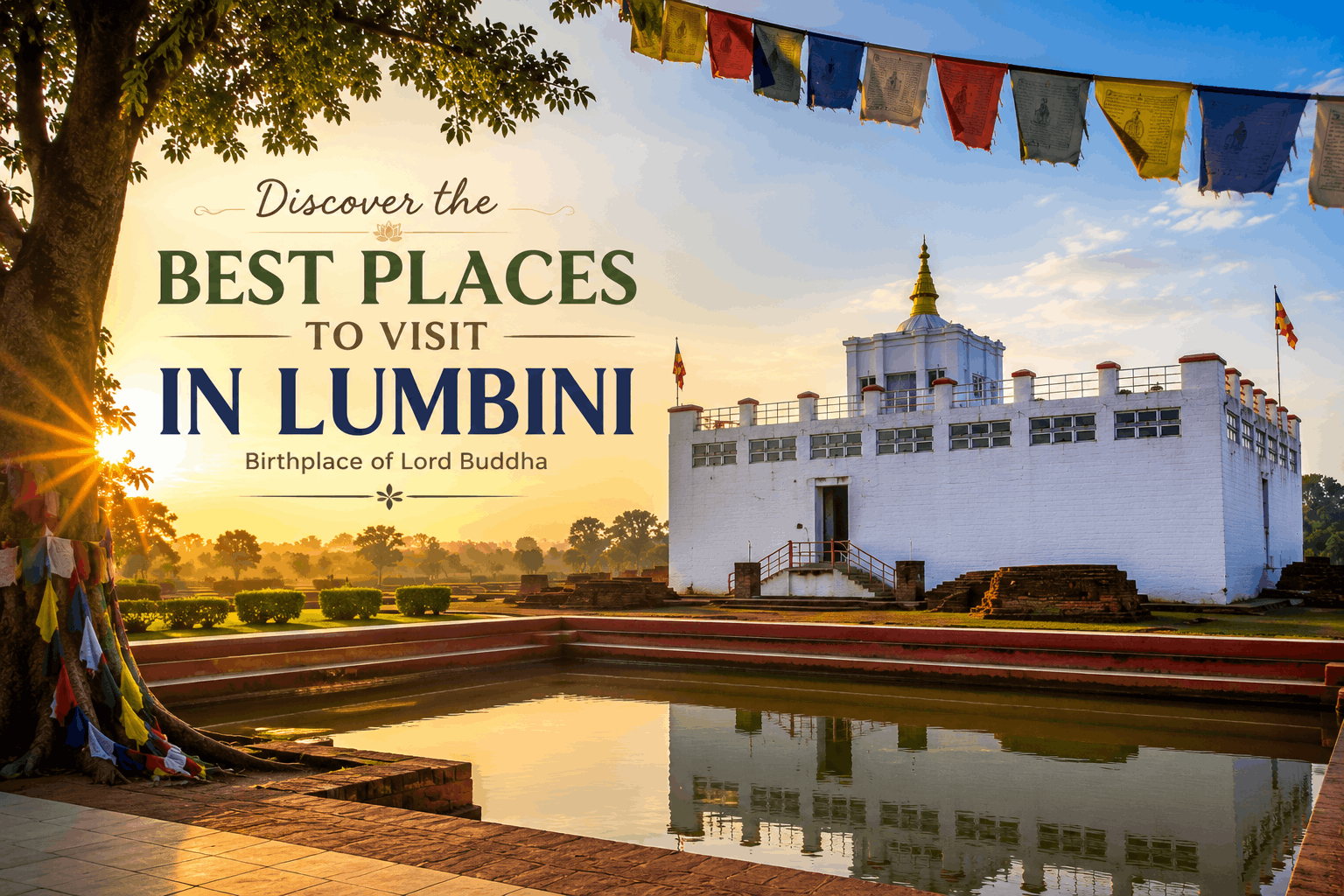
The white pavilion of the Maya Devi Temple protects centuries of archaeological excavations. Inside, a glass-shielded boardwalk takes you directly over ancient brick foundations dating back to the 3rd century BCE. The exact focal point is the marker stone, sandstone indicating the precise birth spot of the Buddha. Just above it is the weathered Nativity sculpture, a stone relief carving depicting Queen Maya Devi holding onto a branch of a Sal tree during the birth.
Outside the white building, you can sit beneath a massive, old Bodhi tree draped in thousands of vibrant prayer flags. Monks from across the globe gather here daily to meditate, fill the air with low, resonant chants, and light candles.
- Tip: You must remove your shoes before entering the temple deck. Bring thick socks if you are visiting during the hotter or colder months, as the ground can get uncomfortable.
For many visitors, Maya Devi Temple remains one of the best places to visit in Lumbini because of its historical and religious significance.
2. The Ashoka Pillar
Quick Answer: Erected by Emperor Ashoka of India in 249 BCE, this famous sandstone monolith provides the primary archaeological and historical proof that Lumbini is the literal birthplace of Lord Buddha.
Standing right next to the Maya Devi Temple is the Ashoka Pillar, one of the most historically significant monuments in Asia. In 249 BCE, the great Mauryan Emperor Ashoka travelled to Lumbini as a devout convert to Buddhism. To mark his pilgrimage and solidify the location’s historical authenticity, he erected this massive sandstone column.
The pillar features a clearly preserved inscription written in Brahmi script and Pali language. It explicitly states that the king wiped away Lumbini’s taxes and declared it a tax-free zone to honour the birthplace of the Buddha. The pillar’s discovery by archaeologists in 1896 permanently verified Lumbini’s status on the world map.
3. The Sacred Garden & Puskarni Pond
Quick Answer: The Sacred Garden surrounds the Maya Devi Temple, acting as a massive sanctuary for meditation. Its centrepiece is the Puskarni Pond, where Queen Maya Devi bathed before giving birth.
The Sacred Garden is a beautifully landscaped, quiet space designed for introspection. Beautifully preserved brick foundations of ancient stupas, prayer halls, and monasteries dating from the 3rd century BCE to the 9th century CE dot the lawns.
Directly in front of the temple lies the Puskarni Pond (also known as the Sacred Pool). Historical texts record that Queen Maya Devi took her ritual bath in this very pond before going into labour, and it was where the infant Siddhartha received his first purifying bath. The calm, mirror-like water reflects the surrounding trees and ancient brick steps, making it an incredible spot for silent meditation.
4. The World Peace Pagoda (Shanti Stupa)
Quick Answer: Located at the northernmost point of the Master Plan, the World Peace Pagoda is a striking white monument built by Japanese Buddhists to inspire global unity and peace.
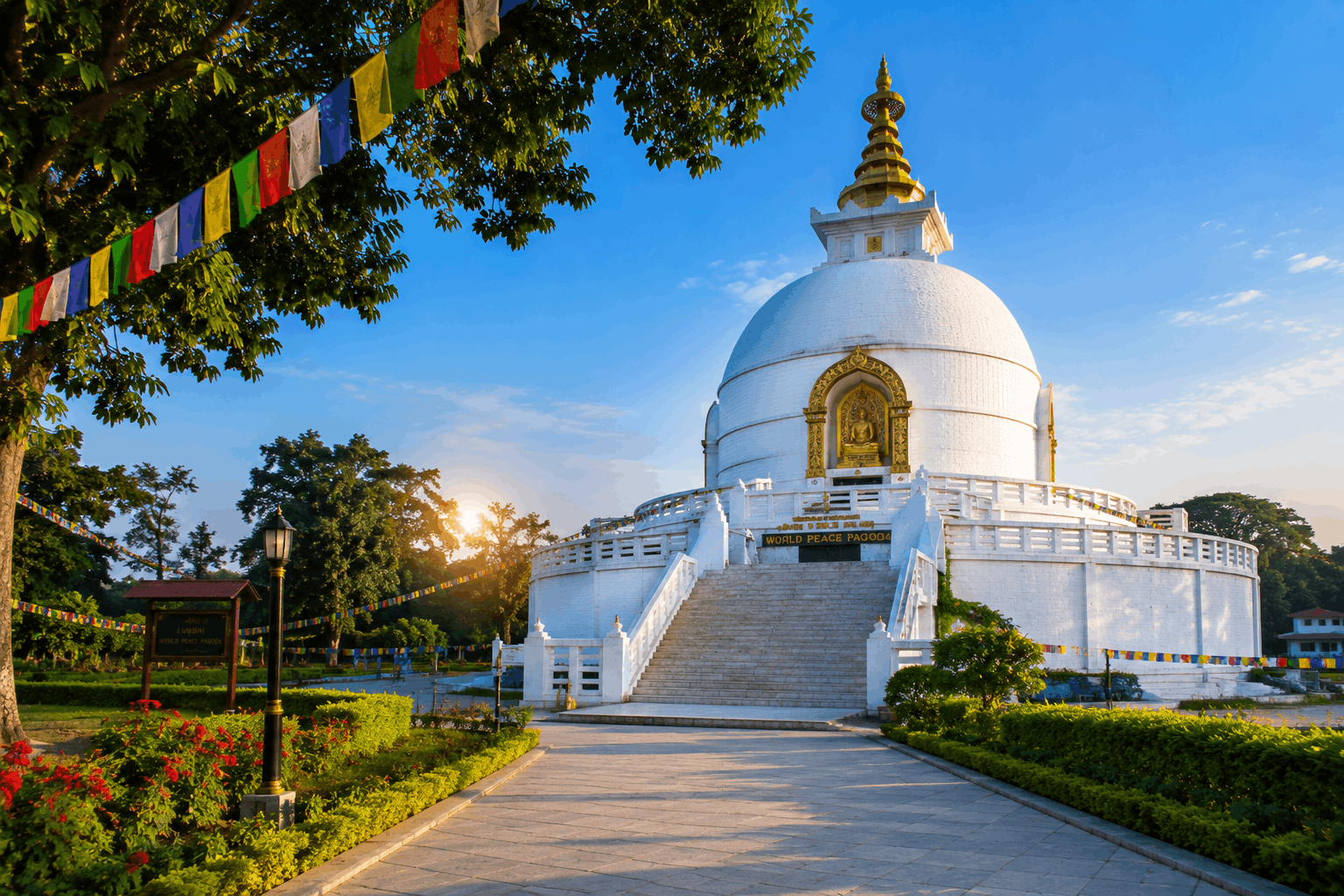
The World Peace Pagoda is a brilliant, brilliant white monument that rises dramatically into the sky. Built by Nipponzan Myohoji monks from Japan, it features a classic dome design topped by a golden spire.
Four gilded statues ornamenting the structure depict the major milestones of Buddha’s life: his birth, his enlightenment, his first sermon, and his final entry into Nirvana. The area surrounding the pagoda is a designated bird sanctuary, often filled with Sarus cranes wading through nearby wetlands.
- Getting There: Because it sits at the far north end of the park, taking a peaceful boat ride down the central canal is the most relaxing way to reach it.
The World Peace Pagoda is consistently ranked among the best places to visit in Lumbini for both pilgrims and international tourists.
5. Royal Thai Buddhist Monastery
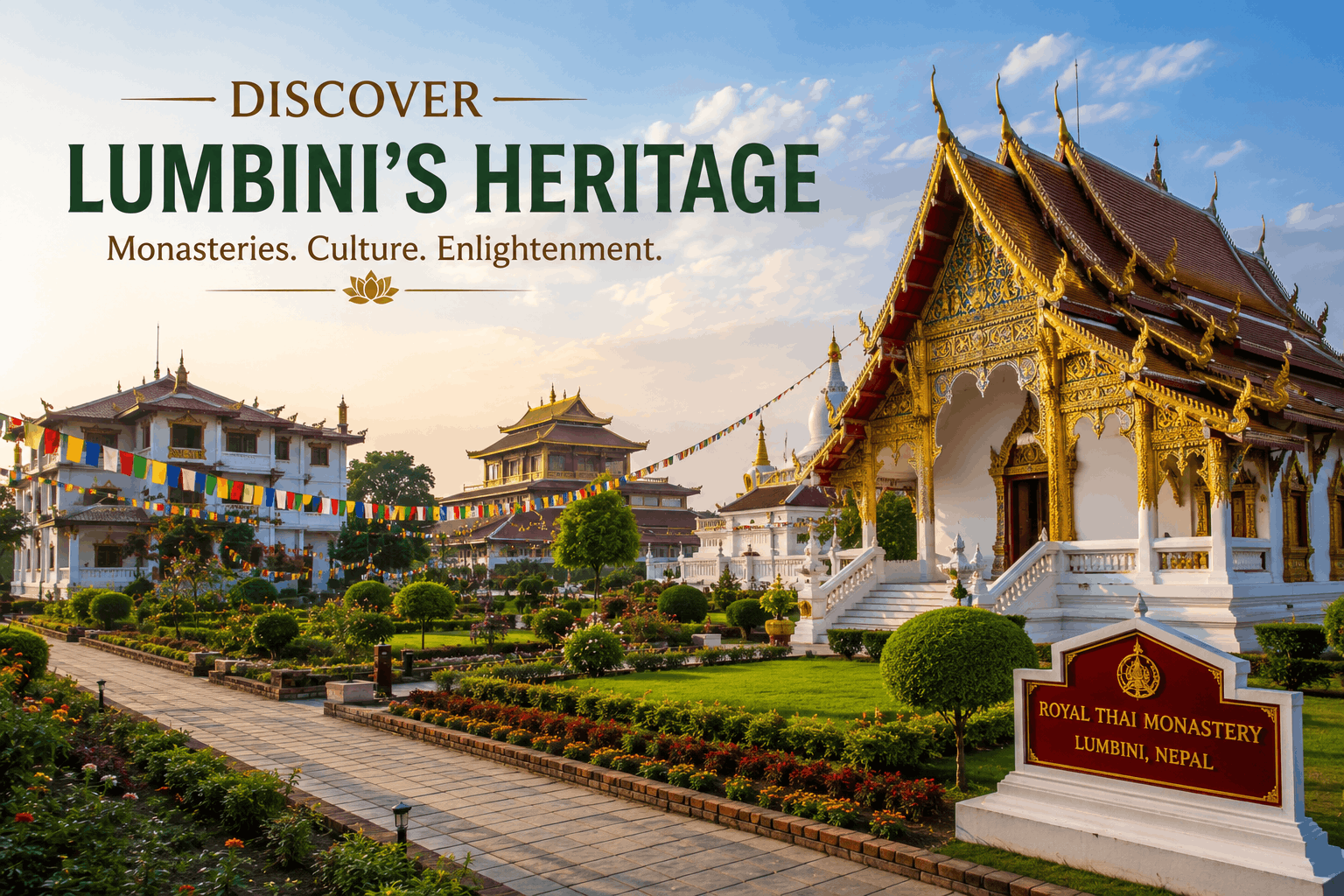
Quick Answer: A stunning example of Theravada architecture, this temple is built entirely out of gleaming white marble and features iconic tiered roofs and ornate gold trimmings.
Located in the Eastern Monastic Zone, the Royal Thai Buddhist Monastery looks like it was transported straight out of Bangkok. The temple’s pristine white marble structures contrast beautifully with the manicured green gardens and blue sky.
The main prayer hall contains a beautifully detailed interior with a large, golden Buddha statue serving as the centrepiece. The entire complex radiates a bright, uplifting energy, and the local Thai monks are highly welcoming to curious travellers.
6. Zhong Hua Chinese Monastery
Quick Answer: Built like a miniature Forbidden City, this monastery showcases classic Chinese imperial architecture, complete with pagoda roofs, courtyard gardens, and defensive-style gateways.
The Zhong Hua Chinese Monastery is one of the most structurally impressive sights in the Western Monastic Zone. As you step through the main gate, you are greeted by manicured courtyard gardens, traditional koi ponds, and perfectly symmetrical pavilions with yellow-tiled roofs.
The inner sanctuary houses three enormous golden Buddhas flanked by intricate woodwork and incense burners. It offers a fascinating look into Mahayana Buddhist traditions right in the heart of Nepal.
7. Great Drigung Kagyud Lotus Stupa (German Monastery)
Quick Answer: Built by the Tara Foundation of Germany, this German Monastery features some of the most striking, intricate Tibetan Vajrayana murals and woodcarvings found anywhere in Asia.
The Great Drigung Kagyud Lotus Stupa is a visual masterpiece. While the exterior features a beautiful white stupa base, the interior of the main pavilion is entirely covered in hand-painted murals detailing the life of Buddha and complex Buddhist cosmologies.
The sheer level of artistic detail across the walls, ceilings, and wooden pillars is breathtaking. It is a quiet, contemplative space that beautifully highlights the rich traditions of Himalayan Vajrayana Buddhism.
8. Cambodia Monastery
Quick Answer: Modeled after the legendary Angkor Wat, the Cambodia Monastery features towering spires wrapped in intricate stone reliefs of mythical guardians and serpents.
The Cambodia Monastery stands out immediately due to its striking, distinct color scheme and architectural silhouette. The temple walls are covered with hundreds of detailed relief carvings depicting apsaras (celestial dancers) and stories from Buddhist lore.
The outer walls are ringed by stone pillars styled after Angkor, making it an absolute must-visit for anybody fascinated by Southeast Asian art and history..
9. Eternal Peace Flame
Quick Answer: Situated at the center of the Lumbini Master Plan, this continuously burning flame was ignited in 1986 to symbolize humanity’s collective wish for world peace.
The Eternal Peace Flame sits at the head of the main pedestrian canal linking the various monastic zones. Shipped all the way from the United Nations to commemorate the International Year of Peace, this flame burns 24/7 without interruption.
Walking along the canal walkway from the flame toward the Peace Pagoda provides a beautifully symmetric view, perfect for early morning or late afternoon photography.
10. Myanmar Golden Temple
Quick Answer: One of the oldest structures in the monastic zones, this temple is modeled after the famous Shwedagon Pagoda, featuring a towering golden spire that catches the light beautifully.
The Myanmar Golden Temple captures the essence of Burmese religious art. The multi-tiered roofs climb toward a sharp, gilded spire that shimmers brilliantly in the sun. The complex contains three main prayer halls, including an exhibition space that details the rich history of Buddhism within Myanmar. It is known for its peaceful atmosphere and fine, delicate metalwork.
Is Lumbini Worth Visiting?
Quick Answer: Yes, Lumbini is absolutely worth visiting for spiritual seekers, cultural explorers, history enthusiasts, and travelers interested in UNESCO World Heritage Sites.
Unlike many destinations that focus primarily on entertainment, Lumbini offers a unique combination of spirituality, history, architecture, and cultural diversity. Visitors can explore sacred archaeological sites, meditate in peaceful gardens, and discover monasteries built by Buddhist communities from around the world. Whether you are religious or simply interested in history and culture, Lumbini provides a meaningful and memorable travel experience.
For travelers planning a Lumbini travel guide itinerary, the destination offers a perfect combination of spiritual heritage, UNESCO-listed landmarks, and comfortable accommodation options near major attractions. Visiting the best places to visit in Lumbini allows travelers to experience centuries of Buddhist history, remarkable architecture, and peaceful spiritual surroundings.Learn more about Lumbini’s UNESCO recognition through UNESCO World Heritage Centre.
Where to Stay in Lumbini
Quick Answer: For a premium, stress-free stay, look for a modern hotel near Lumbini that offers close proximity to the UNESCO site entrance, air conditioning, and reliable transport arrangements.To get the most out of your visit, finding comfortable, reliable accommodation in Lumbini is essential. Lumbini’s climate can vary significantly—ranging from hot summer days to cool winter nights—so returning to a well-equipped sanctuary makes your trip far more enjoyable.
Nearby Attractions Beyond Lumbini
If you have extra time during your stay, several nearby destinations can enrich your understanding of Buddha’s life and the history of the region.These nearby destinations are ideal additions for travelers looking for things to do in Lumbini and surrounding areas during a longer stay.These destinations complement the best places to visit in Lumbini and provide a deeper understanding of Buddhist history.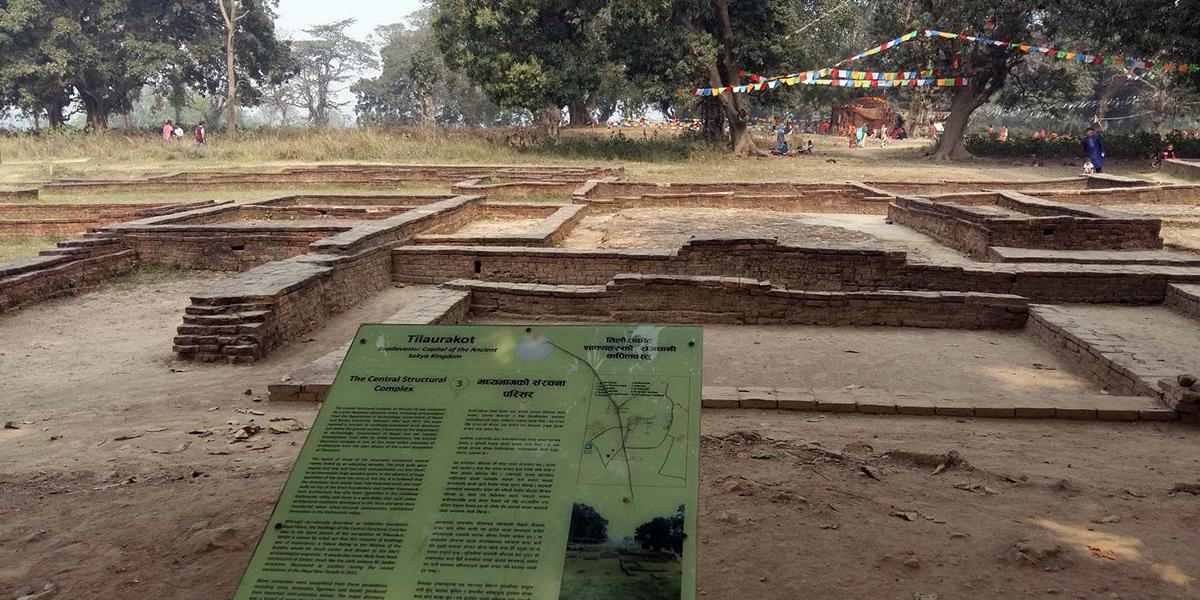
Tilaurakot
Tilaurakot is believed to be the ancient capital of Kapilavastu, where Prince Siddhartha Gautama spent his early years before leaving the palace in search of enlightenment. Archaeological excavations have uncovered ancient city walls, gateways, and artifacts that provide valuable insights into the region’s history.
Kapilvastu Region
The wider Kapilavastu region contains several archaeological and cultural sites associated with the life of Lord Buddha. Exploring these locations offers visitors a deeper understanding of ancient Buddhist civilization and Nepal’s rich cultural heritage
Gautam Buddha International Airport
Located near Bhairahawa, Gautam Buddha International Airport serves as the primary gateway for visitors traveling to Lumbini. Its proximity has significantly improved accessibility for both domestic and international tourists
Selecting the Right Hotel Near Lumbini
When searching for hotels in Lumbini Nepal, prioritize properties that blend international hospitality standards with local cultural warmth. A great hotel should provide:
- Proximity: Located just minutes away from the main entry gates of the Lumbini Master Plan.
- Comfort: Air-conditioned rooms, hot water showers, high-speed Wi-Fi, and plush bedding to rest after a day of walking.
- Dining: An on-site restaurant serving a mix of clean traditional Nepalese, Indian, and Continental dishes.
- Travel Assistance: A dedicated tour desk that can organize local electric rickshaws, bicycles, or direct airport transfers.
Whether you are looking for luxury suites or standard family rooms, booking your where to stay in Lumbini plans ahead ensures a smooth arrival, letting you focus entirely on your spiritual and historical exploration
Practical Travel Tips for Visiting Lumbini
Planning your days effectively ensures you don’t burn out under the sun or rush through the peaceful monasteries.
Recommended 2-Day Itinerary
Day 1: The Spiritual Core & Eastern Monastic Zone
- Morning: Arrive early at the Maya Devi Temple to avoid crowds. Spend time meditating near the Ashoka Pillar and Puskarni Pond.
- Afternoon: Rent an electric rickshaw to explore the Theravada monasteries in the Eastern Monastic Zone, making sure to visit the Royal Thai Monastery and Myanmar Golden Temple.
- Evening: Enjoy a traditional meal and relax at your comfortable hotel near Lumbini.
Day 2: Western Monastic Zone & World Peace Pagoda
- Morning: Take a relaxing boat ride up the central canal to the World Peace Pagoda. Explore the surrounding wetland bird sanctuary.
- Afternoon: Dive into the Western Monastic Zone to visit the highly detailed Zhong Hua Chinese Monastery and the stunning murals inside the German Lotus Stupa.
- Evening: Walk around the Eternal Peace Flame before heading back to pack your bags.
To fully explore the best places to visit in Lumbini, visitors should plan at least two days for sightseeing and monastery visits
Travelers arriving by air may find our guide on the best hotel near Gautam Buddha International Airport helpful for planning a comfortable stay.
Essential Visitor Information
Category Practical Advice Dress Code Wear conservative clothing that covers shoulders and knees. Footwear Slip-on shoes are highly recommended as you will be taking them off frequently. Sun Protection Bring a hat, high-quality sunscreen, and sunglasses; the plains of Nepal can get quite hot. Best Way to Navigate Hiring a local electric rickshaw driver for the day is affordable and supports the local economy.
Can You Visit Lumbini in One Day?
Quick Answer: Yes, it is possible to visit Lumbini in one day, but staying for two or three days allows visitors to fully experience the site’s spiritual atmosphere and international monasteries.
Travelers with limited time can focus on the Maya Devi Temple, Ashoka Pillar, Sacred Garden, and World Peace Pagoda within a single day. However, those wishing to explore the extensive monastic zones, participate in meditation activities, and appreciate the peaceful environment should consider spending at least two nights in a comfortable hotel near Lumbini
Key Takeaways
- Lumbini is an international hub: It features incredibly unique, globally funded architecture spread across dedicated Eastern and Western Monastic Zones.
- Historical authenticity is verified: Monuments like the Ashoka Pillar and Marker Stone offer undeniable proof of Buddha’s life and birth here.
- Plan your base carefully: Choosing a comfortable, well-reviewed hotel near Lumbini ensures you have a refreshing place to recharge after walking through the vast complex.
- Travel mindfully: Respect local rules, dress appropriately, and allow yourself plenty of time to sit in silence
Exploring the best places to visit in Lumbini allows travelers to experience history, spirituality, and world-class Buddhist architecture in one destination.
Before planning your trip, reviewing the best places to visit in Lumbini can help you create a more organized itinerary.
To make the most of your visit, consider reading our Lumbini pilgrimage hotel guide for accommodation and travel planning tips.
Frequently Asked Questions (FAQ)
The following questions address common concerns about the best places to visit in Lumbini and travel planning.
Q1: What is the best time of year to visit Lumbini?
The best time to visit Lumbini is between October and March. During these months, the weather is pleasant, clear, and cool, which is ideal for exploring the extensive outdoor Master Plan area. Summers can be intensely hot, while monsoon season (June to September) brings heavy rainfall.This season is ideal for exploring the best places to visit in Lumbini comfortably
Q2: How can I find the best hotel near Lumbini temple?
To find the best accommodation in Lumbini, look for hotels located close to the main gate of the Lumbini Development Trust. Ensure your chosen property offers modern amenities like reliable air conditioning, clean running water, on-site dining, and easy access to local transport like electric rickshaws.
Q3: Do I need to pay an entry fee to visit Lumbini?
Yes, there is an entry fee to access the Maya Devi Temple complex, and the price varies depending on your nationality (with separate rates for Nepalese citizens, SAARC country passport holders, and international tourists). However, walking through the outer Monastic Zones and visiting the international temples is entirely free.
Q4: How many days should I plan to spend in Lumbini?
We highly recommend spending at least 2 full days in Lumbini. The entire Master Plan area is vast, and rushing through it compromises the peaceful, meditative experience. A 2-day stay allows you to explore the birthplace thoroughly on day one and tour the international monasteries on day two.This allows enough time to experience all the best places to visit in Lumbini without rushing.
Q5: Is Lumbini safe for solo travelers and families?
Lumbini is exceptionally safe, peaceful, and welcoming for solo travelers, spiritual seekers, and families alike. Because it is an international pilgrimage site, the local community is highly protective of tourists. Standard travel safety precautions apply, especially when walking around at night.
Q6: Is Lumbini worth visiting?
Yes, Lumbini is one of the most significant spiritual destinations in the world. Its historical importance, peaceful environment, and diverse international monasteries make it a rewarding destination for both pilgrims and general travelers.
Q7: What is the main attraction in Lumbini?
The Maya Devi Temple is the main attraction in Lumbini because it marks the exact birthplace of Lord Buddha. It is supported by important archaeological evidence, including the Marker Stone and Ashoka Pillar.
Q8: How far is Lumbini from Kathmandu?
Lumbini is located approximately 260 kilometers southwest of Kathmandu. Visitors can travel by road or take a domestic flight to nearby Bhairahawa.
Q9: Which airport is closest to Lumbini?
Gautam Buddha International Airport, located in Bhairahawa, is the closest airport to Lumbini and serves as the main entry point for tourists visiting the region.
Q10: Where should tourists stay in Lumbini?
Tourists should choose accommodation close to the Lumbini Development Trust area for convenient access to major attractions. A well-located hotel near Lumbini can help maximize sightseeing time while providing comfort and modern amenities.Many visitors also search for hotels in Lumbini Nepal that provide easy access to Maya Devi Temple, the Sacred Garden, and other major tourist attractions.
Q11: What are the best places to visit in Lumbini?
The best places to visit in Lumbini include Maya Devi Temple, Ashoka Pillar, Sacred Garden, World Peace Pagoda, Royal Thai Buddhist Monastery, Zhong Hua Chinese Monastery, Cambodia Monastery, and the Eternal Peace Flame. These attractions make Lumbini one of the most important spiritual and cultural destinations in Nepal.
Ready to Experience the Peace of Lumbini?
A journey to Lumbini is more than just standard sightseeing—it is a rare opportunity to disconnect from the noise of daily life and experience a deep sense of inner calm. Don’t let your travel experience be marred by a stressful commute or uncomfortable lodging.
Secure your peaceful sanctuary today by booking a room at a premier hotel near Lumbini. Enjoy top-tier comfort, exceptional local food, and immediate access to Buddha’s birthplace.
Whether you are interested in spirituality, culture, or history, the best places to visit in Lumbini offer a unique and unforgettable travel experience. Exploring the best places to visit in Lumbini offers a meaningful journey through one of the world’s most important spiritual destinations.
[Explore Our Luxury & Deluxe Rooms] — Find your perfect room match.
[Check Special Seasonal Offers] — Get the best value for your pilgrimage.
[Contact Our help Desk] — Let us help plan your custom Lumbini itinerary today.